SMS CX Shouldn't Be NoReply
E-commerce made returns frictionless by eliminating the moment to help. Proactive SMS gives that moment back.
 Ilya Valmianski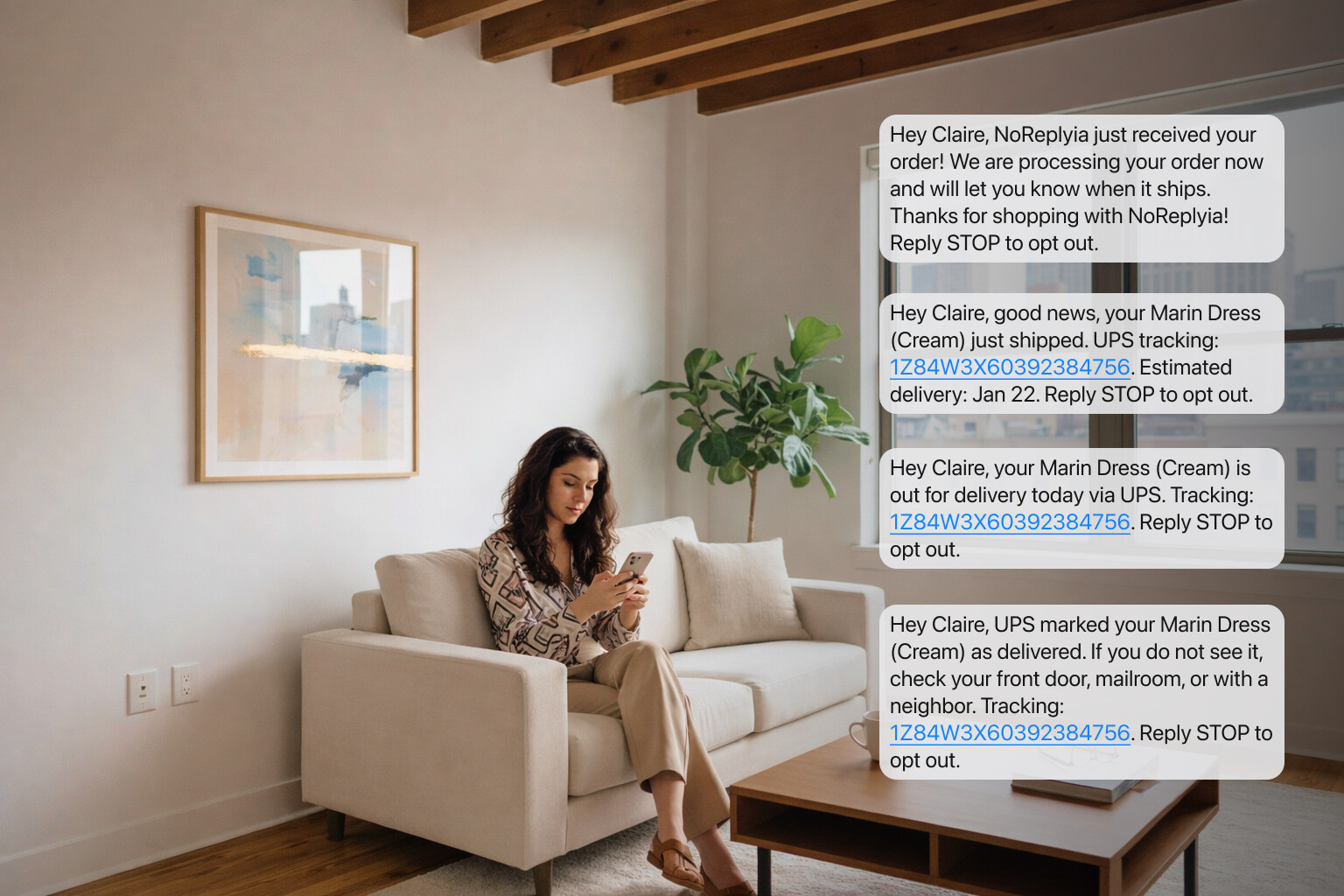
Here is a strange thing about modern commerce.
You buy something online. A text arrives: “Order confirmed.” Another: “Shipped.” Another: “Out for delivery.” And then, at last: “Delivered.”
Four texts. A thread on your phone. A relationship, of sorts.
And then? Silence. The thread goes dead. The number might as well be called NoReply, because that’s what it is. Nobody is on the other side.
Why do we build a thread, and then abandon it?
Here’s what I’ve come to believe: proactive SMS, done right, collapses all the channels into one thread. It solves problems we’ve been working around for decades.
There’s no moment to help.
Think about what e-commerce optimized for over the past decade. Frictionless returns. Prepaid labels, QR codes, drop-off locations, portals that ask minimal questions. The goal: make returning so easy that customers never hesitate to buy.
It worked. But by optimizing for frictionless returns, you’ve eliminated any moment to intervene.
A customer opens the box. She wants the item to succeed (that’s why she bought it), but something feels off. In a store, this is the moment an associate walks over. “How’s the fit? Want to try a size down?” That moment is where a return becomes an exchange, where a one-time buyer becomes a repeat customer.
Online, that moment doesn’t exist. The customer is alone with her uncertainty, and the path of least resistance is the return portal you’ve made so beautifully frictionless. Returns flow smoothly, but you don’t learn why. You don’t get a chance to help. You just process the return and hope she comes back.
Two things make proactive SMS different
The first is the channel itself.
SMS has properties that no other channel combines. It’s synchronous when you need it fast, asynchronous when you need time. It handles photos and video natively. It has the best push notification and doesn’t require an install. The support channel announces itself: the thread appears when the purchase is made.
The second thing is more important: proactive outreach at this moment is perceived as care.
Most people assume “intervention = friction” because they imagine a pop-up blocking the return flow. That would be friction. But texting someone after delivery to ask how things fit? That’s a store associate walking over to help.
Here’s what that looks like in a good store. A customer comes in with a return. The associate doesn’t stay behind the desk. She comes around to the customer’s side and says: “Let’s find something you’re going to love.”
The customer feels it. Even if she still returns the item, she walks out thinking: They’re nice there. That’s the experience that disappeared online, not because brands don’t want it, but because they couldn’t scale it.
One retailer told us about the early days when they were smaller: “When we saw an order come through for a size 6, 8, and 10, someone would reach out and say, ‘Let me tell you how this runs.’ But that doesn’t happen anymore. There are too many emails. We’re too big.”
Proactive SMS shrinks the distance back down. Every customer gets someone paying attention.
The timing is everything. We wrote about this in The End of Reactive Support: the customer bought the item for a reason. Before she concludes it was a mistake, she’s hoping it works out. She’s uncertain, open, persuadable. That’s the moment to show up with help.
“Let us know how it fits. We’re here if you need anything.”
That’s an invitation. When the customer replies, “The waist feels tight, is that normal?”, she’s using a thread that works. Frictionless returns remove barriers, but they don’t create connections. Proactive SMS does both: it lets you help without being in the way.
And yet most brands throw this away. The delivery text arrives from a short code that never responds. The customer learns the thread is a billboard.
If you’re going to build a thread, the thread has to work.
The channel that’s both synchronous and asynchronous
What channel can feel like live chat when you need it fast, and like email when you need time to think?
Email is asynchronous, sure, but it’s not reliably present. Your message competes with newsletters, receipts, spam, and whatever the inbox algorithm decided to bury today. Web chat is present, but only when the customer is on your site. Close the tab? Conversation’s gone.
SMS works both ways.
Reply right now? Feels like chat. Reply 6 hours later? Still feels normal. No guilt, no “sorry for the delay,” no ticket to reopen. Just a thread. The same thread.
This sounds small. It’s the whole point. SMS collapses the other channels into one because it adapts to the moment. No “stay on the line” pressure (unlike web chat). No “did they even see this?” anxiety (unlike email). The customer engages on their timeline. The brand responds when it matters.
Channel comparison:
| SMS | Web Chat | App | ||
|---|---|---|---|---|
| Sync | Yes | No | Yes | Yes |
| Async | Yes | Yes | No | Partial |
| Photos | Yes | Clunky | Varies | Yes |
| No install | Yes | Yes | Yes | No |
| Push | Lock screen | Buried | Tab-based | 33% opt-in |
| Self-announcing | Yes | No | No | No |
The best push notification is the one that doesn’t require an app
Push notifications. Everyone wants them. Think about what it takes to get there.
For app push, the customer has to install your app, create an account, and grant notification permissions. OneSignal’s benchmarks for Shopping apps: 33% opt-in on iOS, 36% on Android. If your post-purchase engagement strategy lives in your app, 2/3 of customers will never see it.
For email, you can reach more people, but can you reach them? Apple’s Mail Privacy Protection has made open tracking unreliable. Validity has documented how Apple’s prefetch behavior shifted pixel firing patterns entirely. Even good emails get buried.
The lock screen is the most-viewed interface in modern life. Asurion research found Americans reach for their phones 352 times per day. SMS is the only way to land there reliably.
“Show me” beats “describe it.”
Support is visual. Especially in commerce.
Is this a defect or normal variation? Does this fit right? Is this color off, or is it my lighting? Did I install this correctly? Is this stain something I can fix?
Force customers to describe these things in words, and you get worse information. Slower resolution. More back-and-forth. Let them show you? One photo. Done.
The messaging inbox handles this naturally. Tap the camera. Take the shot. Send. No upload portal. No “please attach files in PNG or JPEG format under 5MB.” Just the way humans already communicate.
What surprised us in the first pilot
I went in skeptical.
I assumed only people with problems would reply. I assumed most customers would ignore us. I assumed we’d get a trickle of complaints.
I was wrong.
40% of buyers replied within 24 hours. Among those who needed a return, the number was 100%.
Not a typo. Most customers replied, quickly. The vast majority of replies were positive, expressing satisfaction with the item. Every customer who needed a return used the SMS thread. Zero used the portal.
Here’s the kind of thing we see. It matters precisely because it isn’t dramatic:


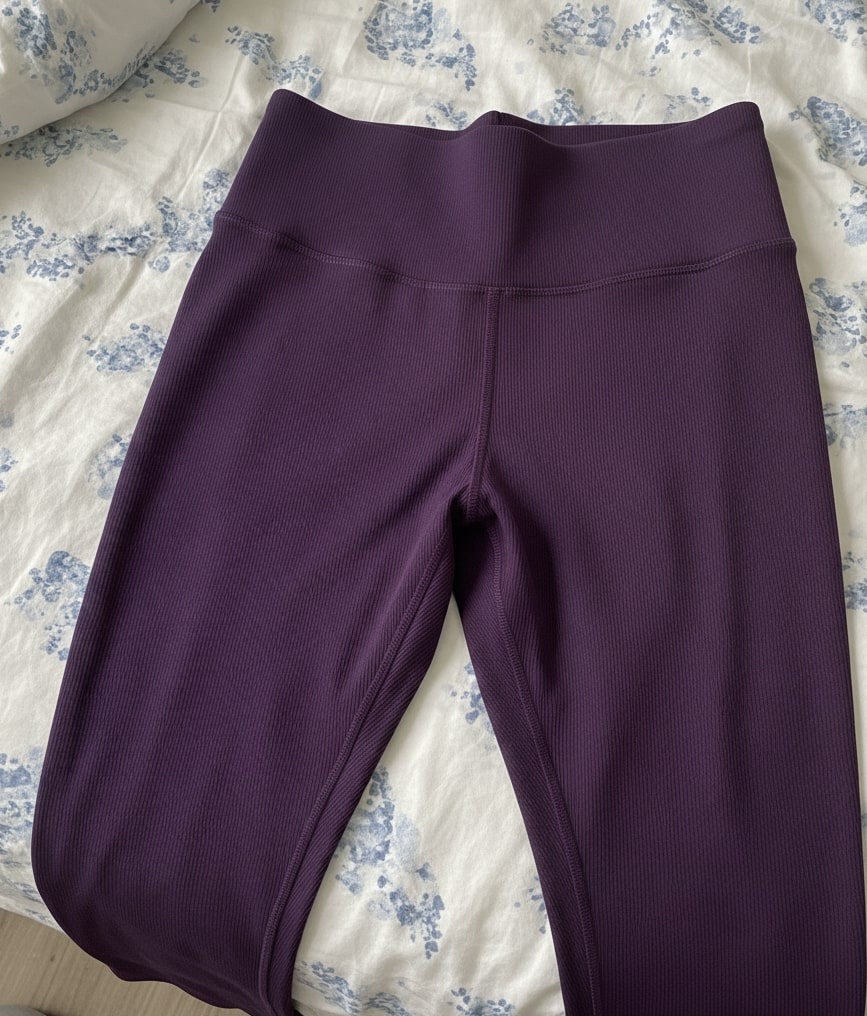
 Scrollable
 That’s a conversation. The kind that used to happen in stores, between a customer and an associate who actually cared. Except now it happens in the default inbox, after delivery, at the exact moment the customer is forming an opinion.
The key is the first message. We don’t just text “delivered.” We text with intent: “Let us know how it fits. We’re here if you need anything.” That turns a notification into an invitation.
Support as a sensor network
Here’s the thing about frictionless returns: they don’t teach you anything.
A customer returns something. You get a dropdown: “Didn’t fit.” Maybe “Changed my mind.” That’s it. No nuance, no signal you can act on.
Traditional support data is the same. It only shows you the extremes: the angriest customers (the ones motivated enough to fight through to a human) and the happiest (the ones who leave reviews). The middle stays silent. And the middle is where most of your product truth lives.
Two-way SMS pulls the middle into the conversation.
The cost of saying something drops to almost nothing. A customer doesn’t have to decide “Is this worth opening a ticket?” She just replies. And when she replies, you learn: which SKUs create confusion (not just which ones break), which product photos are misleading, which size guidance is missing, which packaging detail creates a bad first impression.
That’s signal you can actually act on. The kind that lets you fix causes instead of processing returns more efficiently.
Timing, not volume
Let me be clear about what this is not. It’s not “blast more texts.” People hate that, and they should opt out.
This is about one thread. One durable, trusted thread that starts at delivery (because that’s when uncertainty begins) and stays alive because replying actually works.
Zendesk’s data backs this up: 72% of customers want immediate service. Customers are 2.4x more likely to stick with a brand when problems are solved quickly. And 64% will spend more if you resolve issues where they already are.
“Where they already are.” That phrase is doing a lot of work. The messaging inbox is the clearest example of “already there” that exists.
That’s why NoReply is such a trap. If your first SMS interaction teaches customers the thread is dead, you don’t get a second chance. You’ve trained them to go back to the maze.
Why this wouldn’t work with only humans
You can’t do this with humans alone.
Reaching out to every customer after delivery. Following up the next day. Answering questions at scale. Handling photos. Remembering context. The math doesn’t work. The labor cost would be prohibitive. So historically, brands just… didn’t do it.
AI changes the economics. But AI as gatekeeper is the real problem: the bot that loops, the automation that deflects, the systems designed to avoid talking to you. Customers don’t hate AI. They hate being trapped in automation when they need real help.
SMS cracks this open because it enables seamless transitions between AI and humans.
Web chat has a speed-of-response SLA. If a human takes over, they need to respond now. The customer is sitting there, waiting. That makes handoffs expensive and stressful.
SMS doesn’t have that pressure. Someone can reply in 2 minutes or 2 hours, and it still feels normal. The AI handles the routine (check-ins, context gathering, photo interpretation) and hands off to humans when things get complex. The customer never feels the seam.
That’s what makes it work: AI and humans together, in one channel, transitioning seamlessly because the channel’s timing norms allow it.
What I believe now
I used to think of SMS as “one more channel.” I was wrong.
Two things make proactive SMS different. The channel itself: sync when you need speed, async when you need time, photos and video native, the best push notification without requiring an install, and seamless AI-to-human handoffs because there’s no “stay on the line” pressure.
And the timing. Proactive outreach after delivery is perceived as care. The customer still wants the item to work. Checking in feels like a store associate. Help that arrives before you’ve given up feels like attention.
When customers feel that attention, they reply. Even when nothing is wrong. They talk. And when they talk, you learn: which products confuse, which photos mislead, which sizing guidance is missing. You fix causes instead of processing returns.
If you’re texting customers today, you already have this surface. The thread already exists. The only question is whether you’ll treat it like a billboard or make it a place where help actually lives.